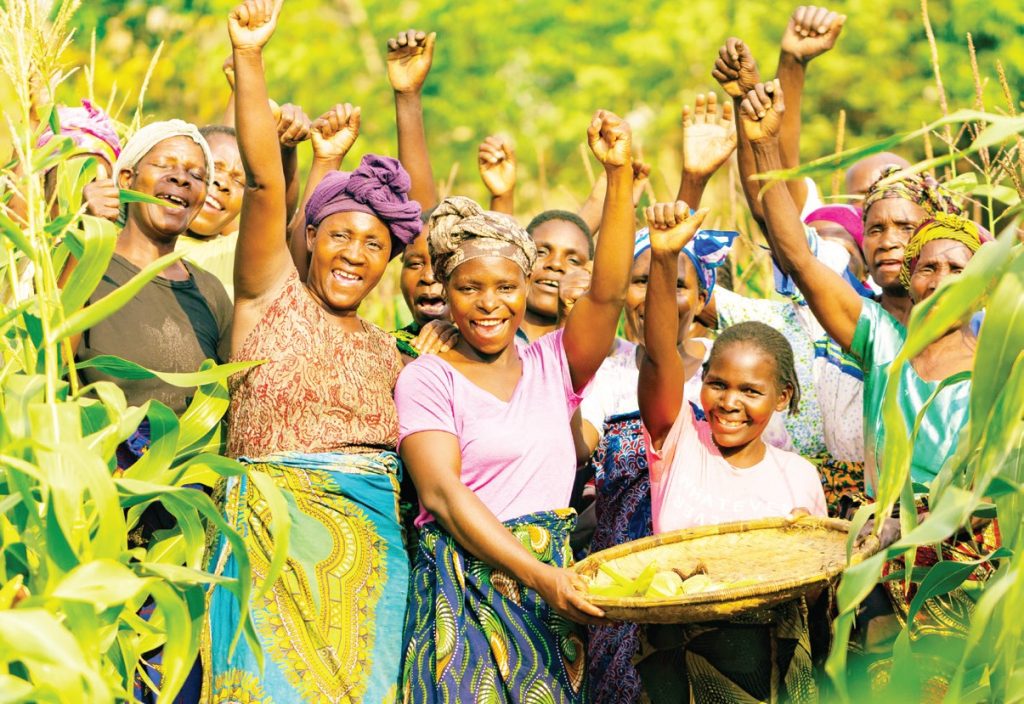
In Manyowe on the cliffs overlooking the Mudi River in Blantyre City, 28 women are rewriting how vulnerable communities survive climate shocks.
Faced with El Nino-induced drought in 2016, they refused hunger as an inevitability. Instead, they built a lifeline of water and thriving crops that now feed their families and a fast-growing city of nearly three million people.
Iness Banda still remembers the years of hunger she survived with her five children amid a futile wait for food aid.
“That single act of waiting pushed me to join these women,” she says. “We had to find another way or keep suffering and waiting.”
The women’s challenge was how to lift water from a river meandering near their village to the thirsty maize, cabbage, and beans growing on the hillsides above.
With a restricted budget or machinery, they had turned to ancestral knowledge and new techniques.
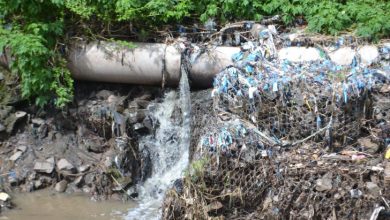
Guided by engineer-turned-extension worker Eunice Mdambalira, they devised a low-cost, high-impact system to harness the Mudi River. Using cement and stones, they constructed an eight-meter-deep temporary dam to capture water and channel it by gravity to their fields.
Using trees, rocks, dry grass, iron sheets and plastic sheeting, they tunnel water from the dam to the three-hectare crops fields uphill.
It is a fragile, but brilliant structure.
“The main outlet has eight tree poles stuck between rocks, crossed with other lines of trees, and sealed with plastic paper,” explains Eliza.
Collective resilience
At the end of every irrigation season, they dismantle it to safeguard it from flooding.
Today, every group member is an engineer. They take turns making basic repairs to keep the system running.
Recognising the power of their initiative, village head Mwandambe provided essential land-sharing agreements that allowed the project to thrive, balancing the community’s seasonal farming needs with the group’s winter cropping.
“When we started working on the irrigation scheme, many people said, right in our face, that there was no way water could be moved up the village to irrigate crops. But see what our madness has given us?” brags Stella Katandika, pointing at lush hillside fields.
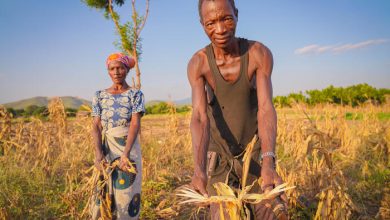
Today, that “madness” brings bumper harvests of green maize, beans and vegetables for 28 farming households and their 200 customers who sell the produce across the city.
In a good farming season, each earns at least K200 000 from sales, on top of the beans and vegetables they take home.
They feed the local community and supply Blantyre’s urban markets, creating secondary jobs for young people who now buy, cook or resell the produce by the roadside.
With less than four years to the finish line of the United Nations Sustainable Development Goals (SDGs), social policy commentator Thokozani Mapemba says the Mwandambe women represent local solutions that need to be front and centre in policymaking.
“We need to ensure that national and district social policies are designed to meet and empower such groups of women who are already on the forefront developing solutions to end hunger and poverty. They should be supported to unlock the potential available in our rural places,” he says.
Ending all forms of hunger is central to the global goals.
“A hungry family cannot send children to school,” says Mapemba. “Similarly, a village grappling with hunger cannot show up to help build school blocks, maintain the road or do any form of development. They must find food first. So, this must be a critical policy conversation for Malawi.”
Looking forward
As Malawi faces a strong El Niño in the current growing season, a harrowing echo of the 2016 crisis where 60 percent of the population faced food insecurity, the women of Manyowe are not waiting for relief. They are preparing for resistance.
The fear of heavy rains damaging their painstakingly built infrastructure remains, but their determination is unwavering.
They are working with extension officers to refine their maintenance strategy and seek additional material support to build permanent water-harvesting structures.
As world leaders meet in Antalya, Turkiye for the 31st United Nations climate summit, the story of Mwandambe women proves that, with the right knowledge, communities can achieve a lot through local leadership. These women managed to adapt to climate change and built a system to defeat it.
*The author is the lead storyteller at FoodThink. This story is part of a collection, spotlighting local solutions to end hunger